
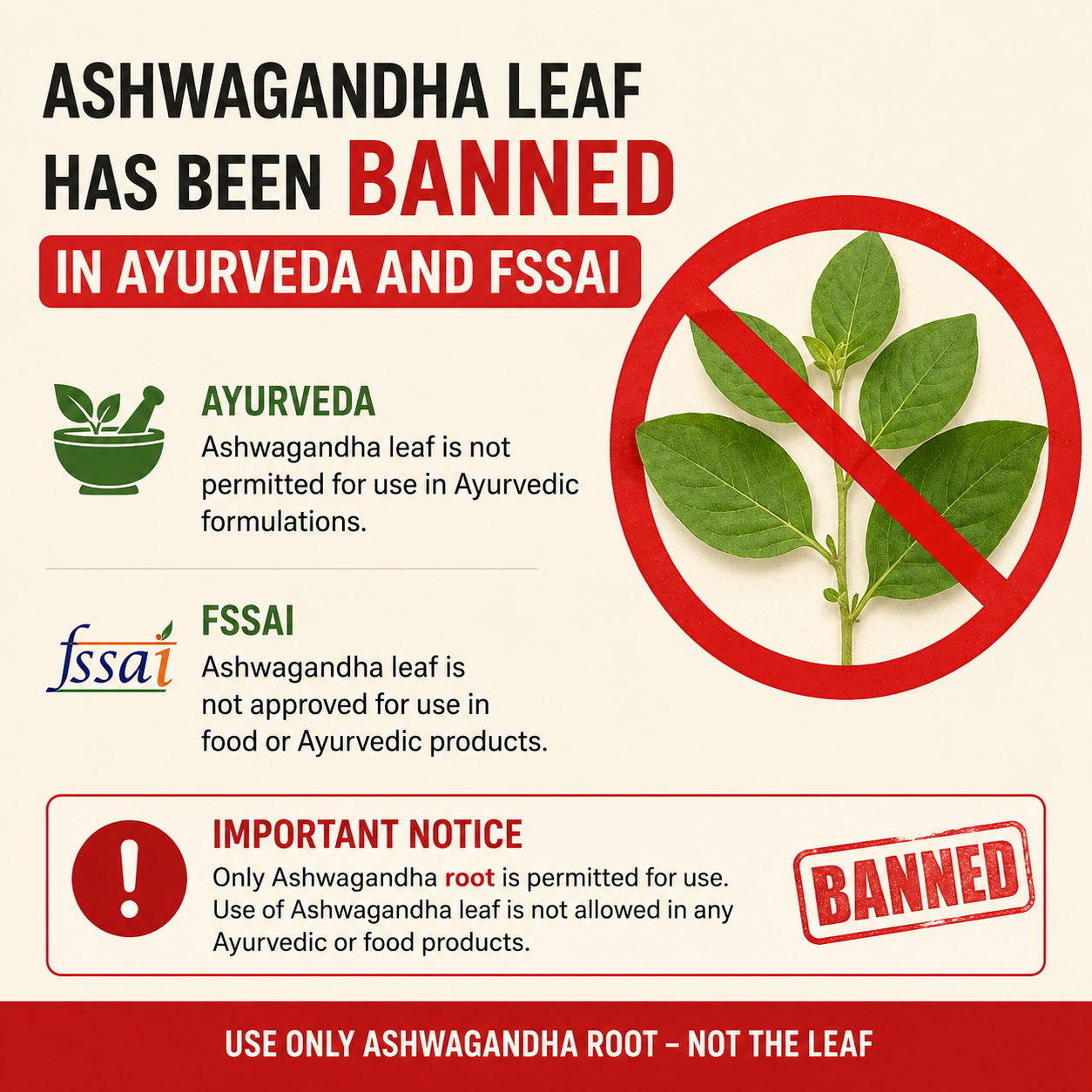
The Controversy Around Ashwagandha Leaf
In the herbal supplement market, some manufacturers started using Ashwagandha leaf extracts because they may contain higher concentrations of certain active compounds known as withanolides. However, concerns were raised regarding whether the leaf is traditionally approved in Ayurveda and whether it should be permitted in food and nutraceutical products.According to Ayurvedic experts and regulatory discussions, the leaf is not widely recognized in classical Ayurvedic formulations in the same manner as the root. Because of this, authorities have closely examined products using Ashwagandha leaf extract.
FSSAI and Ayurvedic Regulatory Concerns
The Food Safety and Standards Authority of India (FSSAI) regulates food supplements and nutraceutical products in India. Questions have been raised about the approval status of Ashwagandha leaf for use in food and health supplements.Traditional Ayurvedic practice mainly supports the use of Ashwagandha root, and many experts believe that the root is the safest and most historically validated part of the plant for therapeutic use. As a result, several industry discussions and advisories have highlighted restrictions or concerns regarding the use of Ashwagandha leaf in certain categories of products.The primary concern is that the leaf may contain compounds in concentrations that differ significantly from the root, which could potentially affect safety, standardization, and regulatory compliance.
Final Thoughts
Ashwagandha continues to remain one of the most valuable herbs in Ayurveda, especially when used in its traditionally accepted root form. The growing discussions around Ashwagandha leaf highlight the importance of regulatory compliance, scientific validation, and respect for classical Ayurvedic practices.Consumers should stay informed, choose high-quality products, and prioritize supplements that clearly mention the use of Ashwagandha root rather than leaf extracts. Understanding ingredient sourcing and traditional Ayurvedic guidelines can help ensure safer and more authentic herbal wellness choices.As awareness increases, both consumers and manufacturers are becoming more focused on quality, transparency, and adherence to Ayurvedic principles — helping preserve the true value and integrity of traditional herbal medicine.